

People buying a new-build home could save hundreds of pounds a year on their energy bills compared with those living in older properties, according to research highlighted by a South West housebuilder.
Devon-based Cavanna Homes says improved insulation, modern heating systems and energy-efficient construction could help households reduce their running costs as concerns continue over future energy prices.
Figures from the Home Builders Federation’s (HBF) latest Watt a Save report suggest that new-build homes are, on average, 21 per cent cheaper to run than older properties.
The research estimates that an average-sized home with an Energy Performance Certificate (EPC) rating of A or B costs around £1,574 a year in energy bills, compared with £1,995 for a similar-sized property rated D.
That represents a potential saving of £421 a year, or approximately £35 a month.
However, actual energy costs will vary depending on the size of the property, heating system, household energy use and tariff.
Energy efficiency becoming a consideration for buyers
The findings come as households face uncertainty over future gas and electricity prices.
A press release issued by Cavanna Homes on 18 November cited forecasts suggesting the typical annual energy bill could reach approximately £2,166 from January 2027.
That figure is a forecast rather than a confirmed energy price cap, and future bills will depend on the final rates announced and individual household consumption.
Cavanna Homes, which builds properties across Devon, Cornwall, Dorset and Somerset, is encouraging buyers to consider the long-term running costs of a property alongside the purchase price and mortgage repayments.
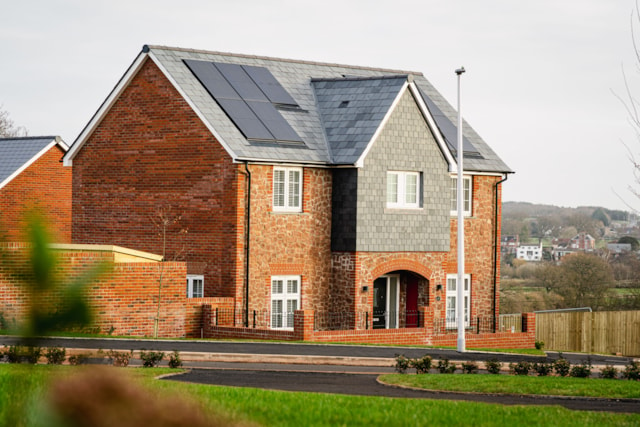
The company says its homes achieve EPC ratings of B or above, with energy-saving features including modern insulation and, on selected properties, solar panels.
Some developments also feature air source heat pumps and underfloor heating.
Most new homes achieve higher EPC ratings
According to the HBF research cited by the housebuilder, 87 per cent of new-build homes achieve an EPC rating of A or B, compared with just 5 per cent of existing properties.
EPC ratings assess a property’s energy efficiency, with A representing the highest rating and G the lowest.
Homes with better ratings generally require less energy to heat, although a property’s actual running costs depend on how it is used.
Older homes can also achieve improved energy efficiency through measures such as insulation, upgraded heating systems and double glazing.
‘Look beyond the initial price tag’
Hannah Newnes, Sales and Marketing Director at Cavanna Homes, said:
“When you’re looking for a new home, it’s natural to focus on the purchase price and mortgage repayments, but the cost of actually living in a property is just as important.
“With energy bills predicted to rise again, buyers are understandably thinking much more carefully about how much their home will cost to heat and run.
“One of the biggest advantages of buying new is that energy efficiency is considered from the very beginning. Modern building standards, effective insulation and energy-saving technology can all help reduce the amount of energy needed to keep a home comfortable.
“And when you consider that a new-build home could save you hundreds of pounds every year, that’s money which could be spent on holidays, family days out or simply making everyday life a little more affordable.”
What should buyers consider?
While newer properties may offer lower energy bills and fewer immediate maintenance requirements, buyers should consider the overall cost of a home before making a decision.
This includes the purchase price, mortgage repayments, council tax, insurance, maintenance costs and any estate management charges.
Prospective buyers can also check a property’s EPC to see its estimated energy use and potential running costs.
For more information about Cavanna Homes’ developments, visit www.cavannahomes.co.uk.

You can join us on our social media pages, follow us on Facebook, X (formerly known as Twitter) and Threads where you can keep up to date with whats going on in South Devon.
Got a news story, blog or press release that you’d like to share or want to advertise with us? Get in touch via email admin@wearesouthdevon.com